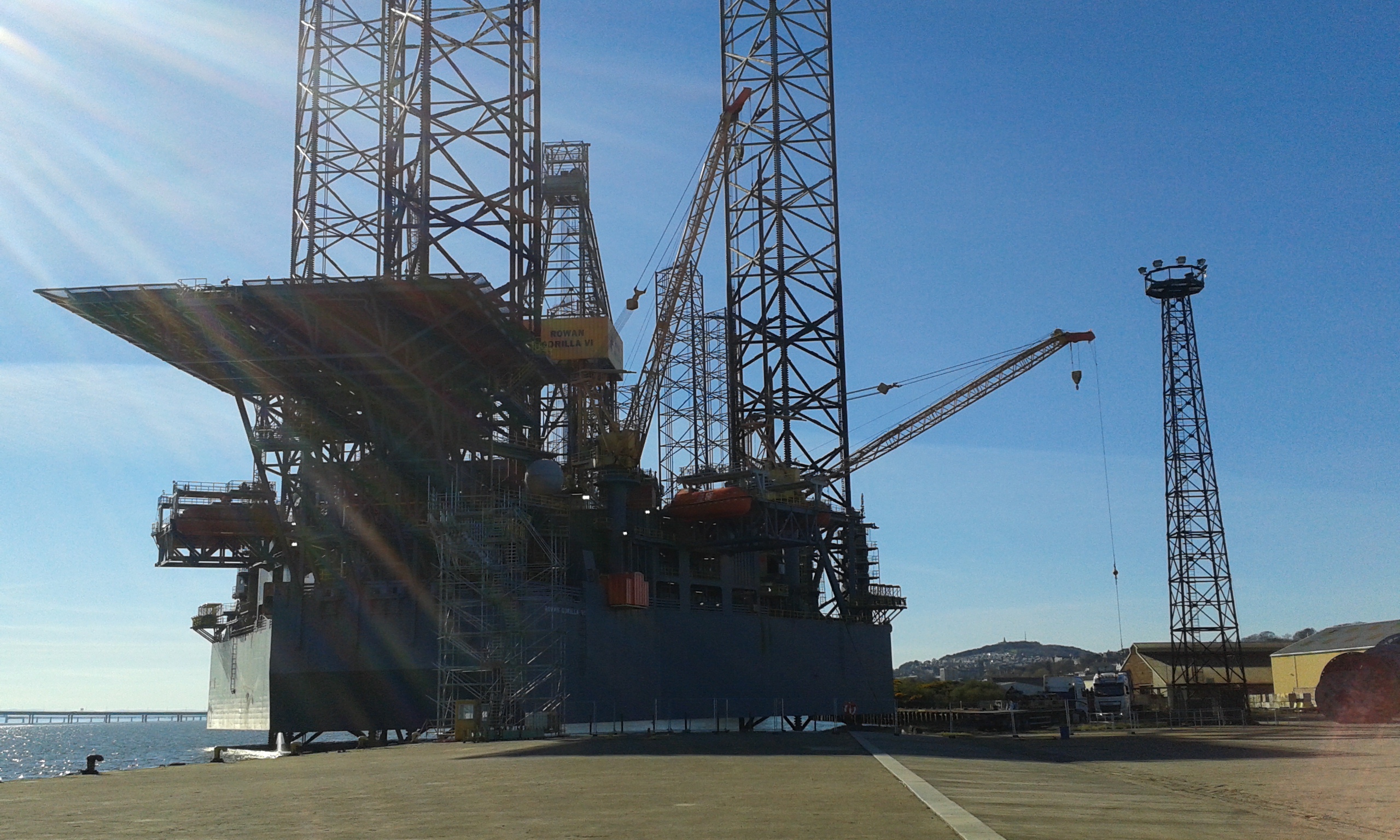
Will the proposed Jackdaw gas field damage the climate, or is it necessary for the UK's energy security? Many of my regular readers may be surprised by the conclusion I reach.
Background and Timeline
The Jackdaw gas field lies around 250 km west of Aberdeen and was discovered in 2005. Shell submitted its first development plans in 2021, followed by a revised 388-page Environmental Statement and development proposal in February 2022. The operator is now Adura, a joint venture between Shell and Norway's Equinor.
The North Sea Transition Authority approved the project and construction began in 2022. However, environmental organisations including Greenpeace and Uplift challenged the decision in court. In January 2025, the Scottish Court of Session ruled that the approvals for both Jackdaw gas field and the Rosebank oil field were unlawful because the Environmental Assessments failed to consider the climate impacts of burning the gas and oil produced.
Construction work was allowed to continue while a new consent process was carried out.
In November 2025, Adura published revised Environmental Statements that included so-called Scope 3 emissions, covering the emissions released when the gas is burned by consumers. The documents were then subject to public consultation. Government and industry sources suggest that the Energy Secretary may make a final decision in October 2026.
If approval is granted, Adura says production could begin during winter 2026/27 because the wells have already been drilled and the infrastructure is 99% complete.
How much gas would Jackdaw supply?
Adura estimates that at peak production Jackdaw will account for around 6% of UK North Sea gas production, equivalent to heating 1.4 million homes. Given that 60% of the UK’s gas is imported I estimate this is equivalent to 2.5% of current UK gas demand.
Supporters of the project argue that its importance extends beyond the gas it produces. Jackdaw would help sustain the Shearwater hub, a major offshore processing facility that supports several other North Sea fields before transporting gas to the St Fergus terminal in Aberdeenshire.
Unlike North Sea oil, much of which is exported before refined products are re-imported, North Sea gas is largely consumed within the UK.
The UK's position has changed dramatically over the past two decades. Until 2004, Britain was self-sufficient in natural gas. Since then, North Sea production has declined steadily, and the country has become increasingly dependent on imports.
Today, more than 40% of UK gas supplies come from Norway via pipeline. A further 20% arrives as liquefied natural gas (LNG), mainly from the United States and Qatar.
Carbon Footprint
The original 2022 Environmental Statement described Jackdaw as an efficient development because it would make use of existing infrastructure at the Shearwater hub rather than requiring major new facilities.
Construction, processing and operational emissions were estimated at around 543,000 tonnes of carbon dioxide equivalent over the field's expected 11-year life. Peak annual emissions were forecast at 131,000 tonnes, representing less than 1% of the total 12.5 million tonnes of carbon dioxide from UK offshore oil and gas production.
The report concluded that there would be "no significant environmental impacts after implementation of mitigation measures".
Environmental campaigners strongly disagreed, arguing that the assessment ignored the much larger emissions generated when the gas is eventually burned.
Adura’s revised 2025 Environmental Statement took a broader view and estimated total lifecycle emissions of 23.6 million tonnes of carbon dioxide equivalent over the project's lifetime. Of this total:
- 3.5 million tonnes (15%) from operations - construction, extraction, processing and decommissioning.
- 20 million tonnes (85%) from consumers burning the gas.
For the operational emissions, it is not clear to me how much of the increase from 543,000t to 3.5 million tonnes reflects a genuine increase in emissions or a broader change in accounting methodology and system boundary.
For 2030, Adura estimates that total emissions associated with Jackdaw would amount to 1.9% of UK emissions and 0.015% of global emissions, leading the company to classify the impact as "minor adverse and not significant".
However, I don’t think that 23.6 million tonnes can reasonably be described as “insignificant”.
Imports and LNG
The UK is relatively efficient at extracting and processing natural gas, although imports by pipeline from Norway are even more efficient because most of their gas production platforms are fully electrified. However, emissions from importing liquefied natural gas (LNG) from the Middle East or the USA are much higher because it must be liquefied, shipped, then regasified in the UK.
If operational emissions account for 15% of the lifecycle emissions of natural gas, and the operational emissions associated with imported LNG are 50% higher than those for North Sea gas, then the total lifecycle carbon footprint of imported LNG would be approximately 7.5% higher than that of North Sea gas.
What about jobs?
Around 3,500 jobs were created during the peak construction phase. The Environmental Assessment quotes only 27 additional full-time roles specifically for Jackdaw related operations but up to 500 in securing the future of the related Shearwater hub including the wider supply chain and jobs created more widely by expenditure incurred on the project.
Arguments for Jackdaw
- Improved energy security in a volatile world, reducing our exposure to international supply disruptions and geopolitical events.
- Domestic gas has a lower production footprint than imported LNG.
- It will sustain infrastructure such as the Shearwater hub and related pipelines that serve multiple gas fields.
- Direct job creation and a signal of continued confidence in the North Sea industry and wider supply chain.
- Extracting domestic gas will increase tax revenues for the UK Government and reduce expenditure on imports.
- Gas will be required for decades to come before renewable technologies scale up. A managed change is better for jobs and society.
- It would not be sensible to abandon and decommission £500m of construction investment.
Arguments against Jackdaw
- Approving any new fossil fuel development is incompatible with the science and climate objectives. The world has already developed oil and gas fields which if all burnt will take us well beyond the 1.5oC UN climate target.
- Jackdaw will have a negligible impact on UK energy security. Additional UK production will not reduce household energy bills because wholesale gas prices are determined on international markets.
- Few jobs will be created. We would be better accelerating investment in renewables, energy efficiency and electrification to provide long-term energy security and employment than extend fossil fuel extraction.
- The only winners will be the oil and gas companies and their shareholders.
Discussion
It is true that the world should not develop any more coal, oil or natural gas. However, unfortunately there is no realistic prospect of most homes and businesses switching to district heating and heat pumps in the next decade. We will still need natural gas to keep warm and keep our heating bills low.
If we don’t open Jackdaw we will have to import an equivalent volume of natural gas. The gas we import will include LNG from the USA and the Middle East that has a higher carbon footprint to produce and transport than gas extracted from the North Sea. Total carbon emissions will rise.
The discussion on jobs is complicated as it involves international supply chains. I suspect that investing an equivalent £500m in heat pumps and heat networks would create more jobs, but this is of little comfort to those whose livelihoods depend on North Sea extraction.
I welcome the legal decision that forced the oil and gas companies to disclose the full impact of their developments as we need to understand the full implications of these major investment decisions. However, Greenpeace, Friends of the Earth and Uplift could now focus more on reducing demand rather than artificially choking off the supply of fossil fuels. Why does the UK still not have a plan to transition away from natural gas boilers in our homes?
Conclusion
Personally, I would like to see a rapid transition away from using natural gas to generate electricity and to heat our homes.
However, given we need natural gas, where should it come from? I conclude that it is better for it to come from local sources rather than import it. This provides more energy security, and it increases our tax income.
Assuming the UK continues to consume significant quantities of gas over the next decade, producing more of that gas domestically rather than importing LNG will result in lower overall emissions than any likely alternative.
In the longer term, the hope is that renewable energy undercuts gas and oil resulting in some of the known reserves being left in the ground.
So, in my view it is a pragmatic decision to open Jackdaw. In addition, we must do all we can to reduce the demand for burning natural gas. The only way to cut global emissions is to cut demand.
Disclosure – I am a member of Friends of the Earth, Greenpeace and a proud owner of a heat pump. I disconnected the natural gas supply from my house in 2022.
Stay Connected and Discover More
If you like this blog, please share with your friends and on social media.
I publish a monthly blog on climate solutions. You can access my existing blogs here, and can search by keyword or category. To ensure you see all my blogs, please join my mailing list - email This email address is being protected from spambots. You need JavaScript enabled to view it. with the header “please subscribe”.
I also post regularly on LinkedIn and Facebook; less so on X, Instagram and Bluesky.
You might also enjoy Carbon Choices, on the common-sense solutions to our climate and nature crises. Available from Amazon or order a signed copy. I am donating one third of profits to rewilding projects.