The recent wildfires in the Cairngorms National Park have reignited an argument about how our land should be managed - traditional land management versus rewilding.
Like armchair football managers, everyone seems to have a view on land management and the risk of wildfires. Unfortunately, the ‘discussion’ on Facebook is polarised, and in many cases deeply unpleasant with offensive, personal attacks and harsh criticism of the main landowner, the Royal Society for Protection Birds (RSPB). Here, I attempt to provide a reasoned balance between those who claim that rewilding can reduce the risk of fires and those with the opposite view.
The Cairngorm Fires
Fires broke out in mid-July 2026 and spread towards the ancient pine forest of Glenmore, the RSPB Abernethy reserve, the Cairngorms ski area and moorland stretching west. Tourist areas were closed for 3 weeks in peak season, and the Police evacuated the village of Nethy Bridge when the wind direction changed. Smoke travelled as far as Aberdeen. Up to 25km2 has been affected. This follows severe fires in 2025 near Dava Moor and Carrbridge which were thought to be Scotland’s largest fires on record at 120km2. However, the recent Cairngorm fires were a particular concern because they struck near the heart of the UK’s largest semi-natural pine forest.
The Debate
Many landowners in the area claim that the traditional land management practice of controlled muirburn helps to manage and reduce the vegetation load and prevent uncontrolled wildfires. On the other hand, conservationists claim that a restored fully functioning ecosystem will be more fire resistant.
Note that this debate is not unique to the Highlands of Scotland. Similar discussions are taking place in Australia, the Mediterranean and North America where traditional land management practices have changed and people and new infrastructure has also encroached into vulnerable areas.
The Case for ‘traditional’ Muirburn
Muirburn is carried out across the eastern Highlands of Scotland including around 40% of the Cairngorms National Park. Estate owners light fires to burn strips of grass and heather, either to help regenerate grasses for sheep grazing or to provide a varied habitat for grouse. Recreational grouse shooting is a major source of income for many estates. Fires are intended to be controlled, burnt in narrow strips and are carried out on a rotational basis over a number of years. This fast and so-called cool burning at the right time of year is claimed to do little damage to the underlying soil.
Under the Wildlife Management and Muirburn (Scotland) Act of 2025 estates must apply for a license before they can conduct muirburn. They must follow a code of practice and burning is banned on areas of peat that are more than 40cm deep. Through periodic burning the vegetation is kept managed and low and is less prone to accidental wildfires. Saplings are also removed which prevents trees establishing on peat soil to the eventual detriment of these carbon stores.
The Case for Rewilding
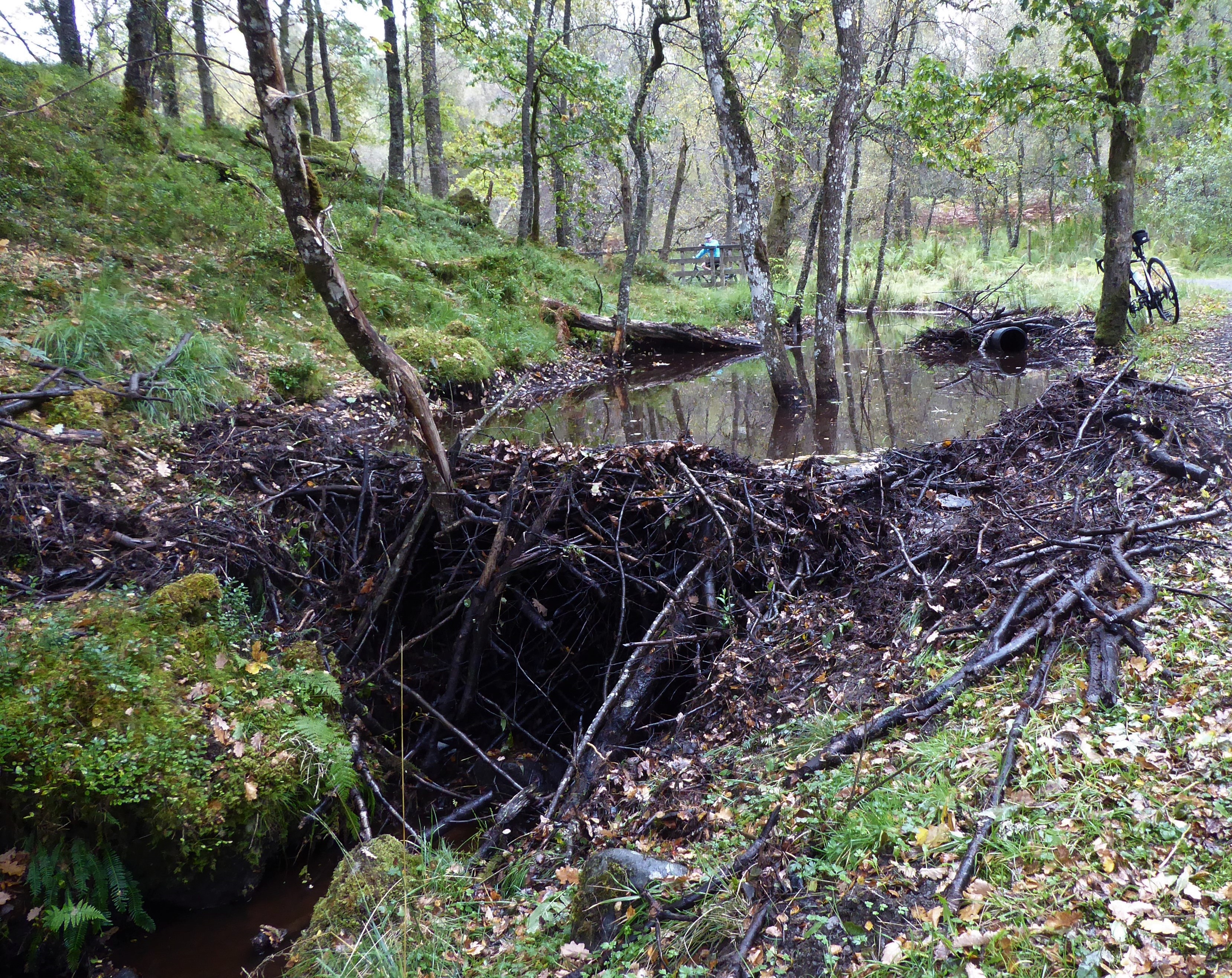
Rewilding aims to restore functional ecosystems which, very broadly, could be wetlands, coniferous or deciduous woodland or treeless bog and peatlands. Sheep and deer numbers are reduced or eliminated to prevent trampling and reduce grazing pressure on young saplings. Blocking drainage ditches can rewet moorland and encourage moss to grow instead of grass or heather, whilst rewiggling rivers and new beaver dams can create wetlands and natural firebreaks. Active grazing by horses, cattle or even bison can create a diverse landscape.
UK peatlands are important for biodiversity and for storing carbon. Scottish peatlands alone store around 2 billion tonnes of CO2 , equivalent to 50 years’ worth of Scottish carbon emissions. Around three-quarters of this peatland is in poor condition because of drainage, overgrazing or afforestation. In fact, although this peatland historically absorbed carbon from the atmosphere, it is now thought it emits more carbon than it absorbs. Grants are available for landowners to restore and rewet degraded peatland which can be good for biodiversity, and in some cases, improve sheep grazing.
The Case against Muirburn
Land managed for sheep or grouse is a human made landscape created over centuries by forest clearance, massive drainage of upland areas and repeated muirburn. This has dried out the soil. Although these areas may not be as prone to wildfires, this is only due to artificially impoverishing the landscape, soil and biodiversity to suit one species of bird, the grouse, for commercial recreational shooting purposes.
The Case against Rewilding
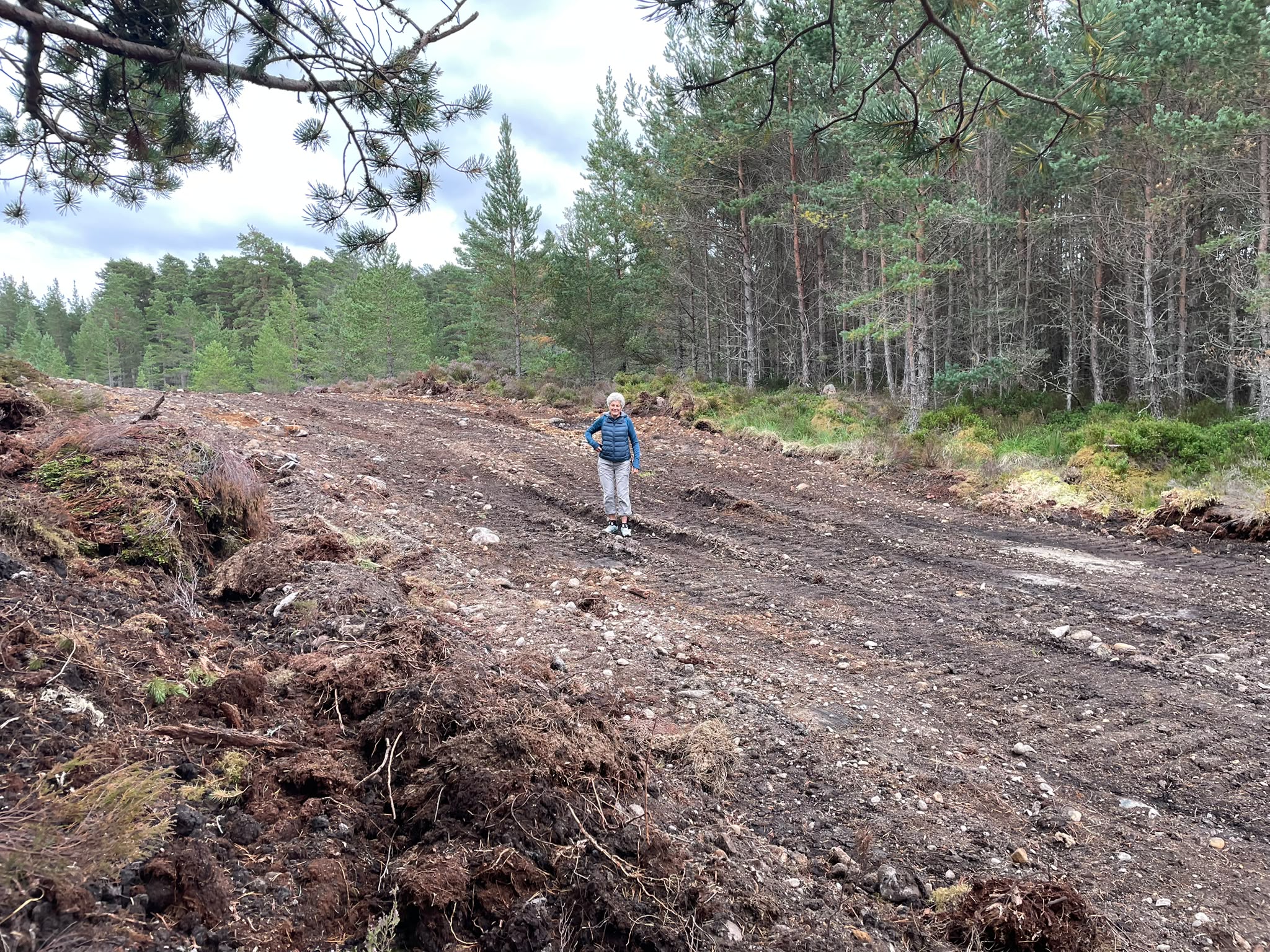
Areas where grazing pressure has been reduced either as a deliberate policy or through land ‘abandonment’ are quickly colonised by tall old heather, gorse or broom bushes, juniper or young trees. Whilst good for wildlife, these shrubby ‘rewilded’ areas contain more flammable material, which if set on fire, burns hotter which can destroy the underlying soil and get into the peat. Peat fires can burn underground for months. It is argued that beaver dams are going to have little impact on many upland areas where many of these fires occur.
Eventually, broadleaf trees like oak, ash, birch and rowan create more fire-resistant habitats but, as the recent fires have shown, coniferous woodlands – even mature pinewoods – remain vulnerable especially if it is a large continuous area without firebreaks.
Research
We do not have enough detailed research on this topic. I only found one recent and relevant report. Whilst most controlled heather burning (muirburn) happens in eastern Scotland, most wildfires occur on the peatlands and grasslands of the north and west. In fact, 96% of wildfires happened outside of muirburn areas. At first glance, this might suggest that controlled burning prevents wildfires. However, the report also challenged this idea:
- Burning frequency makes no difference to the frequency of wildfires; and
- Tourists avoid areas of muirburn, so there is a lower risk of wildfires started accidentally by barbeques and campfires.
So, does controlled burning actually stop wildfires, or are there fewer fires these areas because tourists avoid them?
Some Truths
Our climate has changed and now has no historical equivalent. We are in unfamiliar territory. What was good practice before may be different now and in the future. We need to learn fire hazard and prevention techniques from areas with more experience such as Mediterranean countries.
Risk is also increasing because of the encroachment of new housing and recreation into moorland, scrub and forest areas. This increases the impact of fires. If land is ‘abandoned’ for whatever reason; gorse, broom, tall grasses and heath quickly develop and in the absence of any other change can become highly burnable. This could also apply to land in transition to a rewilded state before woodland becomes properly established. Conservationists should prepare for a higher risk.
Natural firebreaks, provided by rivers or wetlands, are useful and can be strengthened. In vulnerable areas artificial firebreaks may be needed even if it is temporary until a more fire resistant ecosystem is established.
It is not surprising that areas that are subject to frequent muirburn have fewer wildfires. After all there is little vegetation left to burn, and the estates have the equipment and manpower to tackle any wildfires that do break out.
And while it’s true that a build-up of vegetation can increase the availability of fuel, regularly burning or grazing all of Scotland down to ankle height in a bid to avoid uncontrollable wildfires is not an outcome that would be good for the economy or wildlife.
Traditional estate owners should accept that their moorland landscape has in most places replaced trees through drainage and controlled burning. Blocking drains could rewet this land. New planting of trees on riverbanks would benefit salmon through increased nutrients and reduced water temperature.
Conclusions
Change is often resented. However, the new ‘culture war’ between traditional rural gatekeepers of the countryside and ‘incomers’ is unhelpful.
Land management is complex, and will vary depending on the climate, aspect, soils and historical use of the land. The best answer may therefore vary from place to place.
My readers will be surprised that in this case I don’t have definitive answers. Instead, I am calling for reason and sensible debate. Polarised views in this complex debate are unhelpful.
I am no expert in complex land management or fire hazards. Nor are many of the people commenting on social media. We should be asking for a review of fire hazards, more research and engagement with experts and organisations like the Scottish Wildfire Forum. Those who are interested should attend the next UK Wildfire conference to be held in Leeds in November 2026.
Stay Connected and Discover More
If you like this blog, please share with your friends and on social media.
I publish a monthly blog on climate solutions. You can access my existing blogs here, and can search by keyword or category. To ensure you see all my blogs, please join my mailing list - email This email address is being protected from spambots. You need JavaScript enabled to view it. with the header “please subscribe”.
Connect on social media: LinkedIn, X, Facebook, Instagram, Bluesky
You might also enjoy Carbon Choices, on the common-sense solutions to our climate and nature crises. Available from Amazon or order a signed copy. I am donating one third of profits to rewilding projects.