What is the real-life mileage range of an electric car? What about cold weather, and how does it compare to an internal combustion (ICE) petrol or diesel car?
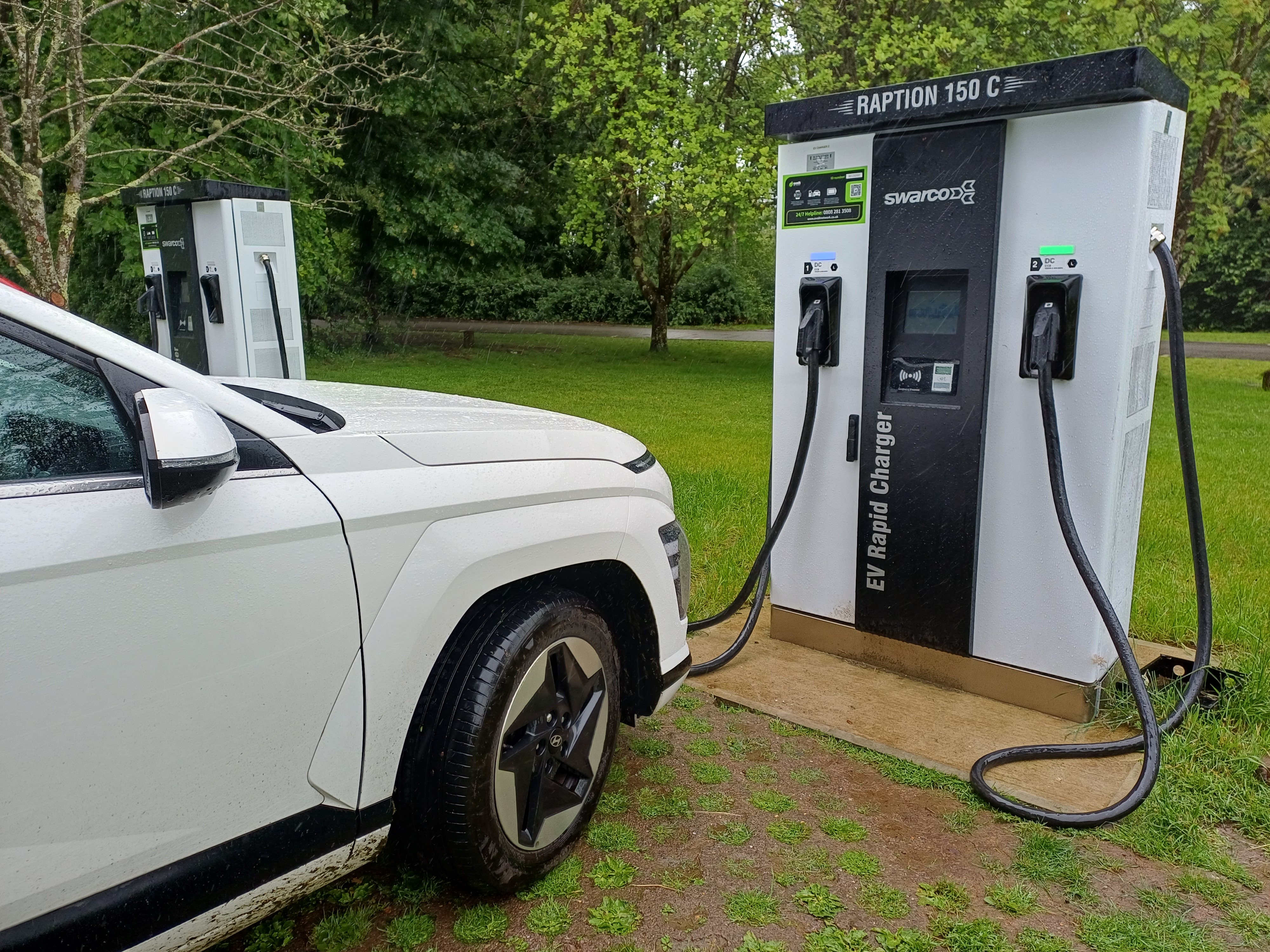
In February I bought a second-hand Hyundai Kona 65.4kW electric car with an ‘official’ driving range of 319 miles. I traded in my 40kW Nissan-leaf with its official range of 168 miles. I also sold my diesel Skoda Octavia - with over 60mpg and a large fuel tank it could travel over 600 miles between re-fuelling.
Overview
The two main factors in determining the driving range for an electric car are the outside air temperature and the speed that you drive. Other factors include rain, wind speed and direction, changes in elevation, and use of headlights and demister.
Although I got nowhere near achieving 319 miles when I bought the car in February, this range is achievable in warmer weather if I drive sensibly.
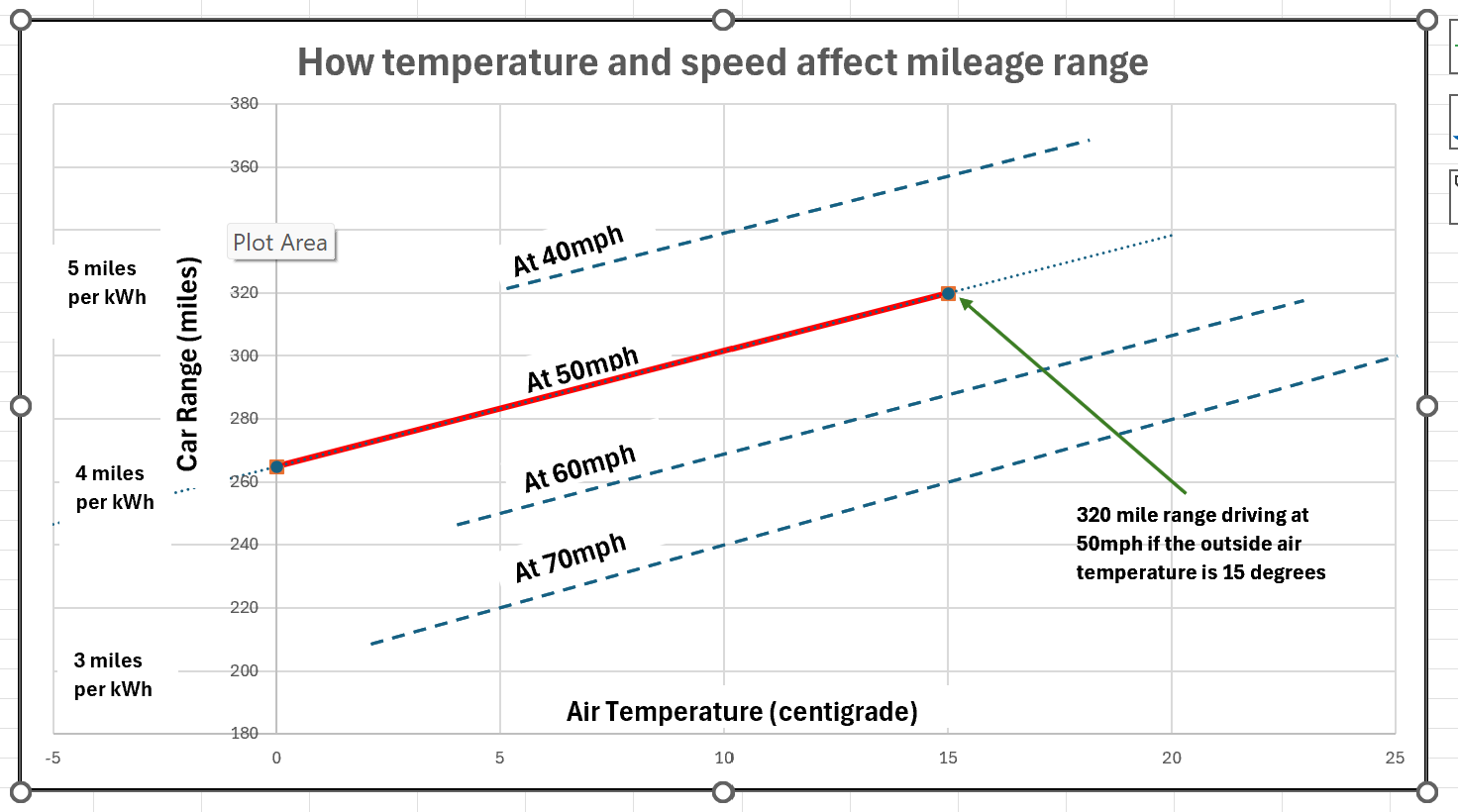
The graph above plots the expected driving range dependent on the outside temperature, with the straight lines plotted showing the variation with speed. These are based on extrapolating a few measurements that I have made. The graph also shows miles per kWh of electricity (eg the 319 mile range equates to 4.9 miles per kWh).
In summary:
- Summer range at slow speed: 340 miles
- Winter range: 260 miles (-24%)
- High speeds reduce range by 20% (50 to 70mph)
- Worst case: 200 miles (-41%)
Although specific to my electric vehicle (EV) I expect the percentage changes to be similar for all electric cars.
Air Temperature
The outside air temperature directly affects the vehicle’s range. As the weather gets colder the range drops. It may also drop at very high temperatures, above 25oC, but that is outside my experience in Scotland so far!
In real use, I’ve managed 340 miles driving at 50mph when the temperature is 20oC. This drops to around 260 miles (-24%) if the temperature is 0oC. This is why I couldn’t achieve 319 miles when I bought the car in winter even when driving sensibly.
EV’s lose range in cold weather because the battery is less efficient and heating the cabin uses extra energy direct from the battery. Fortunately, my car has a mini heat pump which heats the cabin two or three times more efficiently than without a heat pump. So, older EV’s without a heat pump may have an even greater loss of range when cold.
Interestingly, ICE cars also lose range in cold weather. Not from heating the cabin, as they use waste heat from the engine, but from the engine warming up, thicker oil and increased aerodynamic drag through denser cold air. This can be as much as 10-15%, not insignificant, but not as much as the 25% for my EV.
Speed
Air resistance increases to the square of your speed so high speeds kill efficiency for petrol, diesel and EV’s. The most efficient speed for an EV is 40-45mph with a noticeably sharper decline above 65mph. This will be similar for ICE vehicles although every car model is different depending on its engine and its aerodynamic shape.
On a warm day, my range reduces from 340 miles to 280 miles (-18%) if I increase from 50 to 70mph. The biggest range I have recorded was a slower journey on country roads averaging 45mph, achieving a projected range of 360 miles.
At very low speeds, for example, in a traffic jam, all cars lose efficiency, but an EV is far better to drive than an ICE vehicle. An EV uses no power when idling, it can capture energy from regenerative braking, and of course, it does not contribute to your local air pollution.
Other Factors
Switching the air conditioning on reduces the range of all vehicles.
My car has LED headlights which use relatively little power.
Wet roads increase tyre rolling resistance, affecting all cars, but worse for an EV as the windscreen wipers use power from the battery. Similarly for the demister but this is usually only on for a short period. Rain and damp conditions reduce the range considerably.
I notice a significant difference in range if I am driving up a mountain pass in the Highlands but mostly cancelled out if I return the same way or descend the other side. Windspeed and direction can also have a significant influence, affecting all vehicle types.
A heavily laden car or one driven with the wrong tyre pressures will also reduce range.
Unlike bikes carried on the roof which create a significant drag, I haven’t noticed any difference carrying two bikes attached to a tow bar at the rear. I guess towing a caravan would make a significant difference though!
Worst Case Scenario
A reasonable worst-case scenario is driving at 70mph at 0oC when it is dark. My range would drop significantly to 200 miles (or less if damp and raining) a 41% decrease. Interestingly, using the same scenario, an ICE’s range might drop 20 to 30%.
Why do we worry about EV range?
Now that I have a decent mid-high range EV, I don’t worry much about range. The car dashboard tells me exactly how many miles I have left from the battery.
However, compared to my 600-mile Skoda, the Hyundai has a shorter range, so you are more likely to notice the drop off in range, particularly in cold weather and if driving fast against a strong headwind.
Conclusions
High speed significantly reduces the range for both ICE and EVs. Cold weather also affects all engine types but more for EVs.
Range anxiety is almost irrelevant to me as most of my mileage is short to medium journeys from home. On occasional longer journeys, especially on motorways in winter, then range anxiety can be an issue. There are plenty of chargers but at motorway service stations they are expensive to use. Please sign up to my mailing list if you don’t want to miss my next blog post – this will delve into charging costs and convenience.
---------------------------------------------------------------------------------------------------------------------------------------------------------------------------------------------------------------
If you like this blog, please share with your friends and on social media.
Stay Connected and Discover More
I publish a monthly blog on climate solutions. You can access my existing blogs here, and can search by keyword or category. To join my mailing list email This email address is being protected from spambots. You need JavaScript enabled to view it. with the header “please subscribe”.
Connect on social media: LinkedIn, X, Facebook, Instagram, Bluesky
You might also enjoy Carbon Choices, on the common-sense solutions to our climate and nature crises. Available from Amazon or order a signed copy. I am donating one third of profits to rewilding projects.