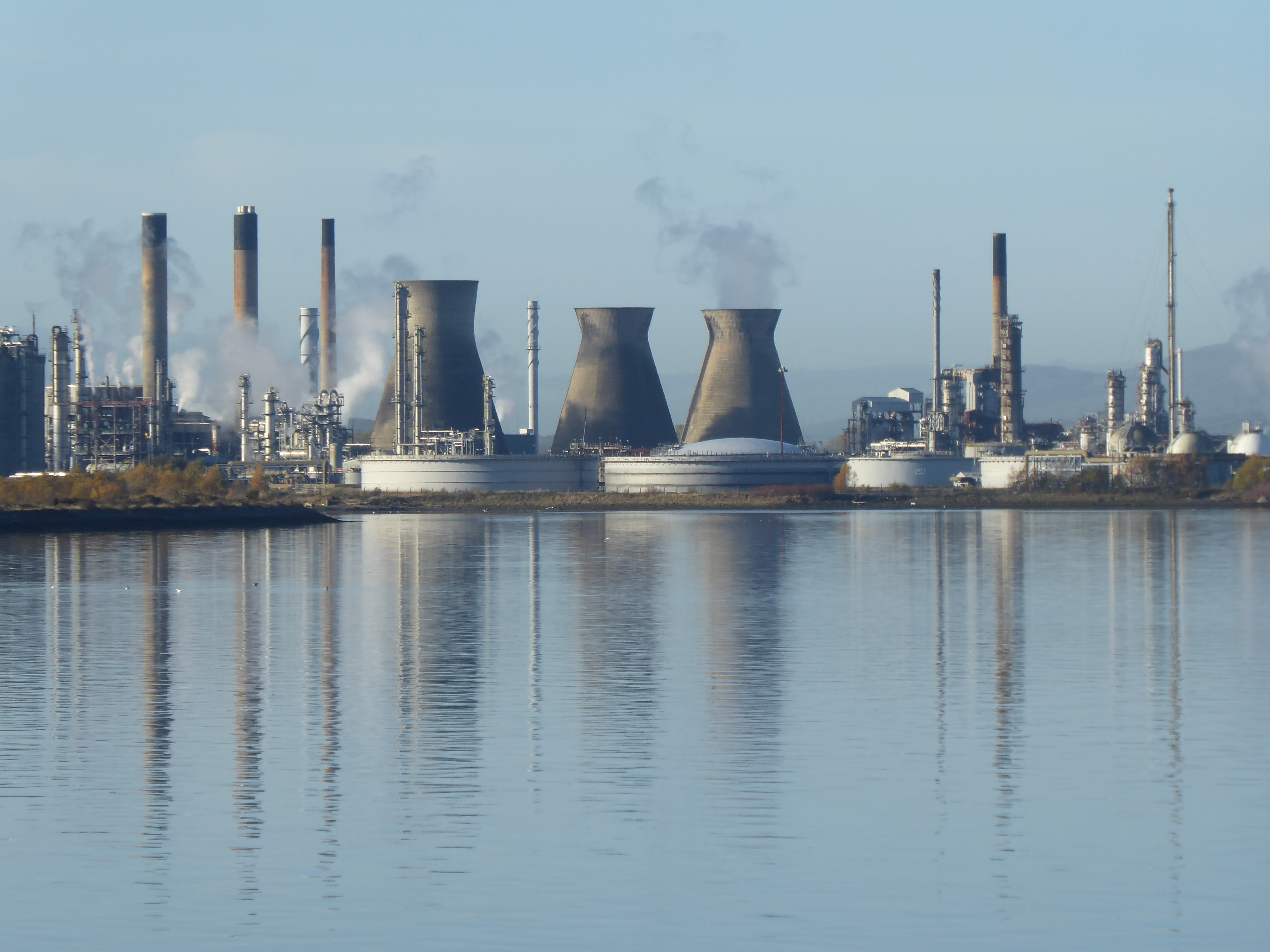
This article examines the complex landscape of international economic and climate policy, focusing on emissions trading schemes and carbon border pricing mechanisms. These issues are critical to the future of UK manufacturing, jobs, and global carbon emissions.
Introduction
We often focus on emissions we can directly influence, such as those from our homes, vehicles and diets. However, emissions associated with manufacturing the materials used in shared infrastructure and consumer goods that we buy are frequently overlooked. These account for around 13% of the UK’s direct emissions, with significant additional impacts arising from imported products. Key raw materials—concrete, cement, steel, aluminium, and plastics—are all highly energy‑intensive to produce, and the UK relies heavily on imports for aluminium, steel and plastics.
Government Incentives to Decarbonise
Over the years governments have introduced measures to encourage heavy industry and associated manufacturing to decarbonise:
Step 1
The EU introduced an Emissions Trading Scheme (ETS), of which the UK was initially a member. The scheme set an emissions cap across heavy industry, the power sector and parts of the aviation sector. Companies can choose to reduce emissions through measures such as energy efficiency, or purchase allowances for each tonne of carbon they emit. By placing a price on carbon, the ETS creates a clear incentive to decarbonise, with prices expected to rise as the emissions cap is progressively tightened.
Step 2
However, the ETS places UK manufacturers at a competitive disadvantage relative to imports that may not face an equivalent carbon price. This risks reducing domestic production and increasing reliance on overseas suppliers, leading to ‘carbon leakage’, where lower UK emissions are offset by higher emissions abroad. In many cases, overseas manufacturing—often reliant on coal‑fired power—combined with additional transport results in higher overall emissions. A poorly designed ETS could therefore increase global emissions.
To mitigate this risk, certain sectors were allocated free allowances to protect UK manufacturers.
Step 3
The drawback of free allowances is that they provide little incentive for carbon‑intensive industries to reduce emissions. As a result, the UK plans to phase out most free allowances between 2027 and 2036.
In parallel, both the UK and the EU are introducing a Carbon Border Adjustment Mechanism (CBAM), under which importers must pay a charge on carbon‑intensive commodities such as iron and steel. This will increase the cost of imports, helping domestic manufacturers to compete. While administratively complex, the CBAM broadly ensures that imported products face a carbon price comparable to that paid by UK manufacturers under the ETS. It may also encourage other countries to adopt carbon pricing and incentivise overseas producers to reduce their emissions.
Step 4
The CBAM applies to raw materials, but carbon leakage remains an issue for UK manufacturers of products with a high iron and steel content, such as cables, industrial machinery, and consumer goods including washing machines. Imported fruit and vegetables—produced using ammonia‑based fertilisers—also fall outside the scope of the tax, giving them an unfair advantage over domestic producers.
In response, the EU has proposed extending its CBAM to cover 180 additional products from 2028, although agricultural products are excluded due to the added complexity this would entail.
Next Step?
The CBAM increases raw material costs for UK manufacturers, which is likely to undermine their export competitiveness. A logical next step would be the introduction of exemptions or compensation mechanisms to offset this impact—adding yet another layer of administrative complexity.
The UK’s CBAM
From 1 January 2027, the UK’s Carbon Border Adjustment Mechanism will apply to companies importing more than £50,000 per year of aluminium, iron, steel, cement, fertiliser, and hydrogen. The tax rate will be aligned with the ETS price and is expected to raise around £180 million annually.
The charge is based on default direct and indirect (Scope 1 and 2) carbon‑intensity values for overseas‑manufactured products, which are yet to be published. The liability can be reduced where imports have already been subject to an overseas carbon price, or where manufacturers can verify that their emissions are below the default values. This places a significant evidential burden on importers—relying on data provided by exporters—to substantiate any reductions claimed.
UK and EU Integration?
The UK left the EU Emissions Trading Scheme in 2021 and established its own ETS. However, it is now in discussions with the EU to link the two schemes. This would create a unified carbon price and exempt EU imports from the UK’s CBAM, and UK exports from the EU’s CBAM.
One key difference between the two systems is the use of revenues. In the UK, proceeds from the sale of allowances (£3.6 billion in 2024) flow directly to the Treasury, whereas in the EU they are more directly reinvested in climate‑related measures such as innovation, industrial decarbonisation, and renewable energy deployment.
The EU introduced its CBAM on 1 January 2026, one year ahead of the UK’s planned launch. The two schemes are broadly similar, although the EU’s also covers electricity.
Both the UK and the EU argue that their CBAMs comply with World Trade Organisation rules on the grounds that they are environmentally motivated and non‑discriminatory. However, some developing countries contend that CBAM constitutes a trade barrier and may seek to challenge it through the courts.
Implications - the Chemical Sector
A Oxford Economics report commissioned by INEOS highlights the scale and importance of Europe’s chemical sector. These industries face mounting pressure from high gas and electricity prices, carbon costs, and tariff uncertainty. If they were to contract or collapse, their output would likely be replaced by imports from the United States or China.
The proposed changes to the ETS and CBAM offer limited protection for these sectors. What is needed is a framework that incentivises emissions reduction without undermining international competitiveness.
Discussion
A price on carbon is necessary to incentivise industry to reduce emissions. However, imposing carbon taxes that undermine the global competitiveness of UK industry is not credible. Such policies risk job losses and, more critically, higher global emissions as production shifts to countries without comparable carbon pricing.
This logic underpins the combination of a carbon price through an ETS and a levy on imports from countries without a carbon price using the CBAM. In principle, a CBAM can also encourage other countries to invest in renewable energy and cleaner industrial processes, thereby avoiding the charge.
In practice, however, CBAM introduces significant administrative complexity and may trigger trade disputes. Its design creates opportunities for loopholes and unintended consequences, while increasing consumer prices in Europe and reducing the competitiveness of manufactured exports.
This leads to the conclusion that revenues raised through carbon taxes—from both the ETS and CBAM—should be recycled into measures that support the long‑term competitiveness of UK industry, including investment in innovation, energy efficiency and modern plant and equipment.
If you like this blog, please share it with your friends and on social media.
Stay Connected and Discover More
To get first sight of my new blogs, email This email address is being protected from spambots. You need JavaScript enabled to view it. with the header “please subscribe”.
Connect on social media: LinkedIn, X, Facebook, Instagram, Bluesky
You might also enjoy my book Carbon Choices, on the common-sense solutions to our climate and nature crises. Available from Amazon or order a signed copy. I donated one third of its profits to rewilding projects.