In my last blog, I talked about how far my electric car can travel in different conditions. This time, I’m looking at how easy it is to charge—especially on a long trip (next time, I’ll write about the cost).
Most of the time, I charge at home, which is much easier and cheaper than filling up a petrol car. But recently, I drove 1,400 miles over two weeks from Scotland around Wales.
Before the trip, I downloaded a few apps:
- Zapmap – to find chargers
- Electroverse – to pay for charging
- Tesla app – just in case
The Journey to Wales
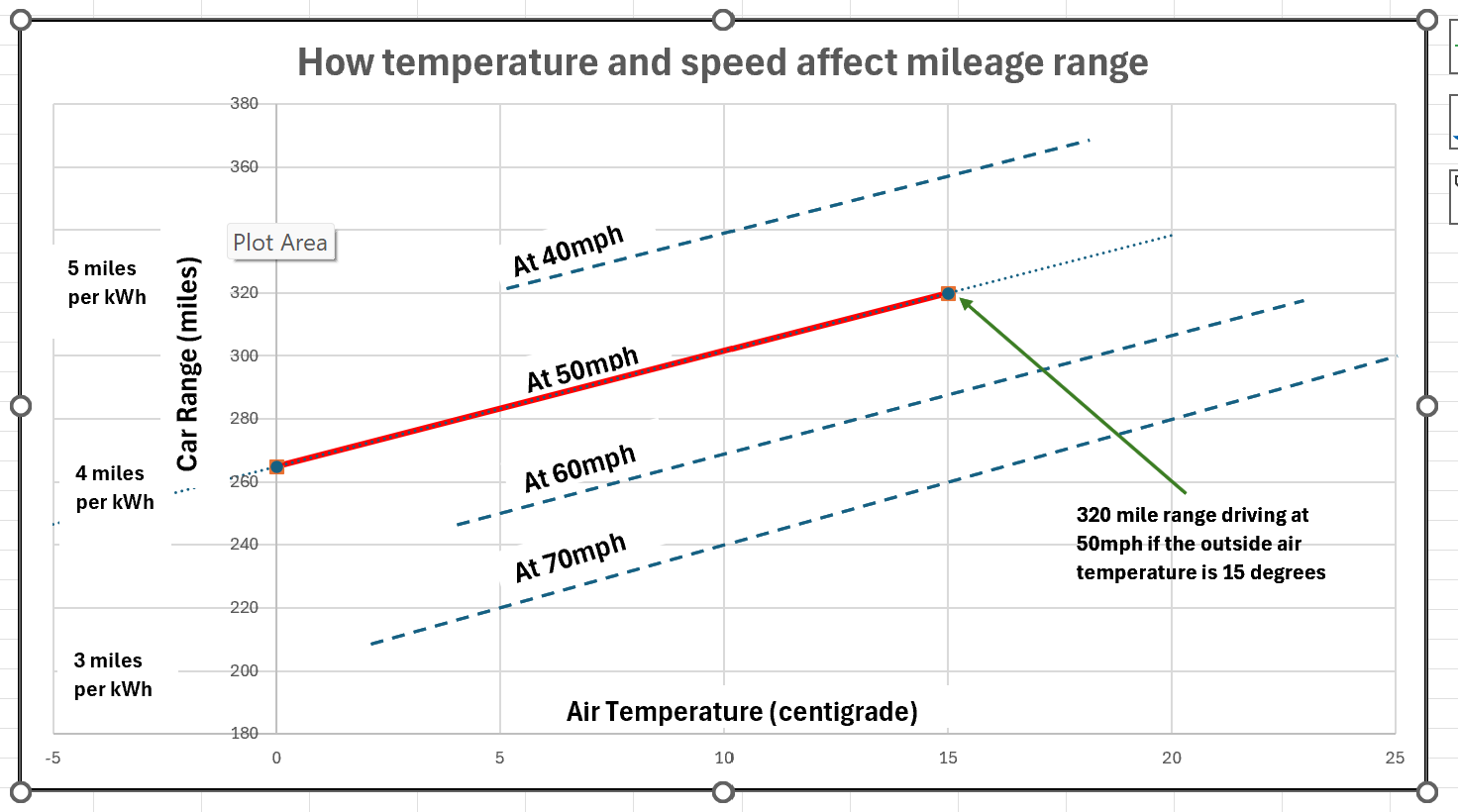
My first drive was 320 miles. My Hyundai Kona (65 kWh battery) has an official range of 319 miles. Since I was driving on motorways and I didn’t want to arrive with an empty battery I knew we’d need to stop.
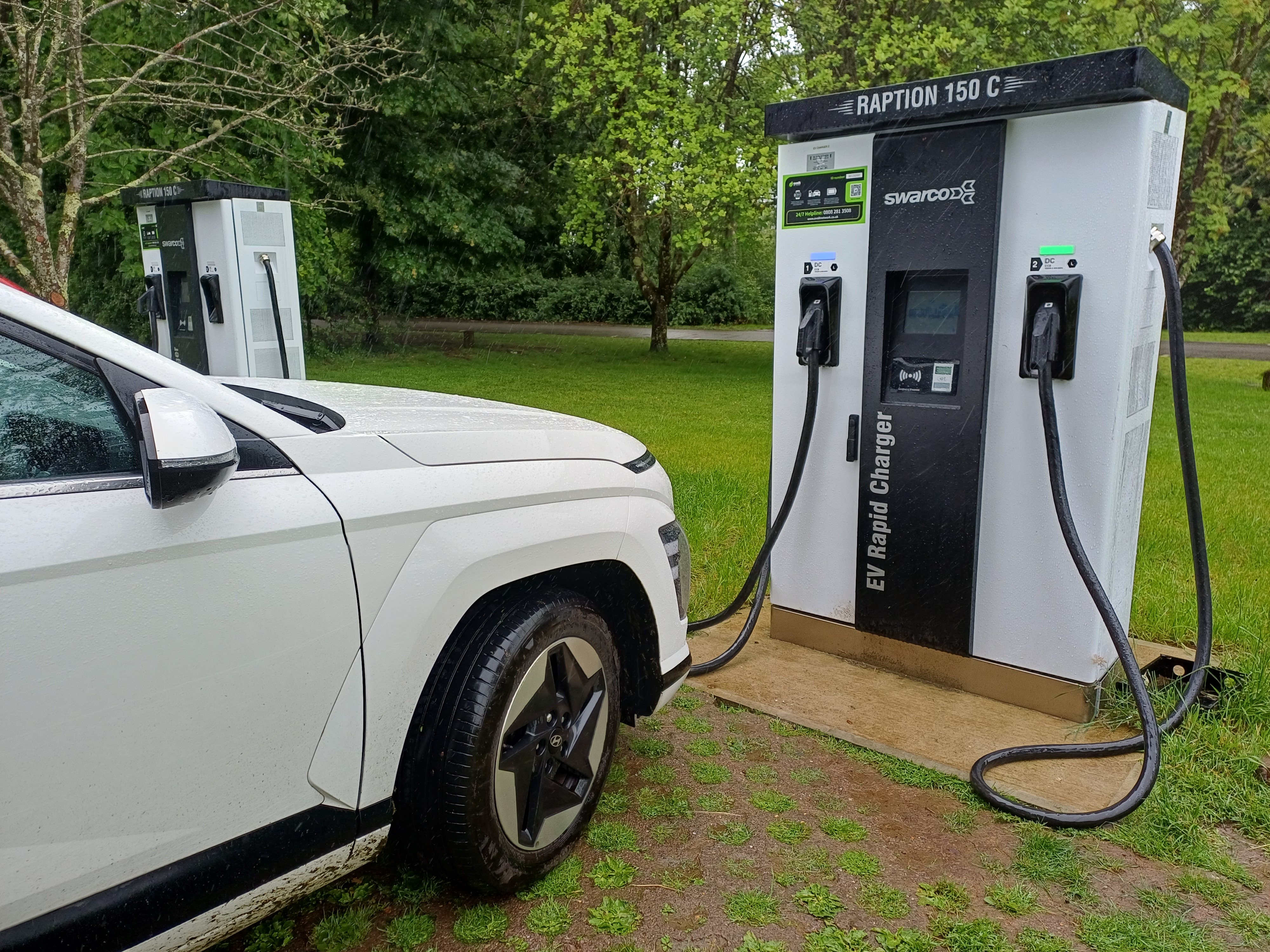
My first stop was Killington Lakes services on the M6. I drove up to the first 240kW fast charger, plugged in and waved my credit card at the machine. It didn’t work. I reversed and moved across to the next bay, and it worked fine. Relief. Charging the car from 34 to 85% took 43 minutes, enough time to have a coffee and rest.
Later I stopped at a hotel in Wrexham with 350kW fast chargers. 45 minutes topped the car up from 50 to 91%.
The first lesson I learnt is that fast chargers are only really fast when the battery is between about 30% and 70%. After that, charging slows down to protect the battery.
Charging During the Holiday
In Betws-y-Coed, I used a 150 kW charger in a car park near shops and a fish and chip shop—very convenient. However there was a £10 extra charge if you stayed over an hour which didn’t give enough time to fully charge to 100% and I may also have been expected to pay £2 for parking each time I charged there.
In Aberystwyth, I used a 50 kW charger at Tesco—simple and easy. I think there was a maximum of 3 hours free parking there but this was sufficient time for us.
At Tenby leisure centre, things were trickier. 3 out of 4 chargers were (selfishly) blocked by petrol cars. The 22kW chargers only charged at 11kW with my own cable so I had to leave the car overnight and walk back to our accommodation (22kW chargers use AC; my onboard charger in the Kona can only charge at a maximum of 11kW from AC).
At a friend’s house in Swansea, I charged using a normal 3-pin plug. This was very slow, 2.2 kW but it enabled me to top up overnight and have a full battery to start my journey home.
The Journey Home
Impressively I managed the 420-mile motorway journey home with only one stop. The 180kW fast charger at a M6 motorway service station increased my charge from 23 to 97% in one hour, enough time to sit in the sunshine for lunch. I arrived home with 13% battery left.
What I Learned
- Charging is quite easy on a relaxed trip but it may feel less convenient if you’re in a hurry or the weather is bad
- Most chargers were available, but I wouldn’t want to have to queu
- Fast chargers are good, but my Hyundai Kona is limited to a maximum of 100kWh from fast DC chargers and only 11kWh from slower AC chargers (3.5kWh to 30kWh)
- Also fast charging is not as fast as expected as charging slows down a lot after about 70–80%
- On long journeys it is therefore better to charge little and often (30% → 70–80%)
- The Electroverse card worked at most chargers
What Could Be Better
- Car chargers are like car parking charges – confusing with too many apps, payment methods and terms and conditions
- Charging rules and prices are not always clear – I couldn’t always read the digital screens in the glare of sunlight
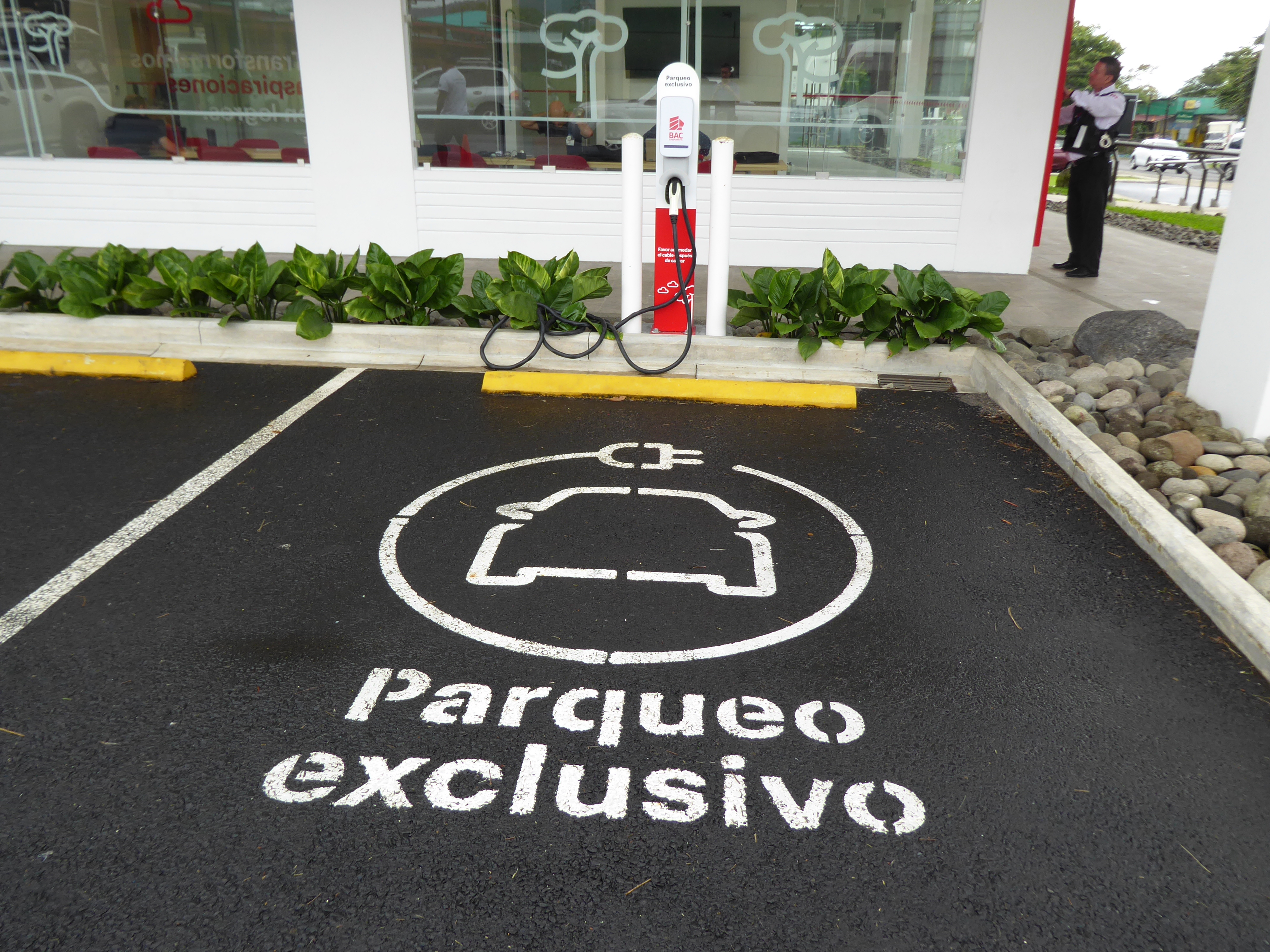
- EV spaces should not be blocked by petrol cars (or overstaying EV’s)
- Some places popular with tourists still don’t have chargers (Haven Holidays leisure park at Tenby and National Botanic Garden of Wales).
Recommendations
- Make charging rules and pricing clearer – preferably legible digital information on the charger itself
- Standardise payment systems
- Stop petrol cars using EV charging bays
- Clearly show car parking rules at charging locations
Final Thoughts
Overall, charging an electric car was convenient enough for a relaxed holiday. It just needed a bit of planning and patience. With better infrastructure and clearer systems, it will become even easier in the future.
My next blog will look at the cost of charging—which is a whole different story!
--------------------------------------------------------------------------------------------------------------------------------------------------------------------------------------
If you like this blog, please share with your friends and on social media.
Stay Connected and Discover More
I publish a monthly blog on climate solutions. You can access my existing blogs here, and can search by keyword or category. To join my mailing list email This email address is being protected from spambots. You need JavaScript enabled to view it. with the header “please subscribe”.
Connect on social media: LinkedIn, X, Facebook, Instagram, Bluesky
You might also enjoy Carbon Choices, on the common-sense solutions to our climate and nature crises. Available from Amazon or order a signed copy. I am donating one third of profits to rewilding projects.